Friday, March 31, 2017
Special Announcement
This morning I finalized a five-book deal with Liberty Island, a small press in New York, to bring out my Steve Dane thriller series in print, ebook, and audio editions. This officially makes me a "hybrid author", or one who has a traditional publisher, but also self-publishes. I will continue to self-pub other material (mainly my Stiletto series) while giving them exclusive rights to publish the three Dane books already out (after some revisions, and my editions will be removed from Amazon by the end of today) and the two that are written but haven't been electronically published, with an option on more should we wish to continue the effort. This is the result of months of back-and-forth, and it feels good to finally be done and moving forward.


Friday, March 17, 2017
Get Carter: The Original Brit Grit
Oh, man, Get Carter is a book I really, really wanted to like, but I really, really had a hard time with it.
I wondered why. Here we have one of the seminal works of 1970s crime fiction (originally entitled Jack's Return Home) that takes place in an industrial town in Britain. We have great local color, terrific descriptions of the hard life of the town, gritty descriptions of the criminal element that hides just beneath the surface, and a terrific anti-hero who returns to his hometown to right a wrong and doesn’t care if he has to blow away his old buddies to do it.
What was the problem? It took until the middle of the book for me to figure it out.
Too many imitations.
In the years since Get Carter, a gazillion writers took what Ted Lewis did and populated book shelves with so many copies that they ruined the original in the process. It took a long time for me to read Get Carter because it was out of print, but I knew all about it. I’d seen the movie, of course--loved it. I’d read all the praise about it--is there a bad review? Thanks to Soho Press and its recent reprint (they did all three Jack Carter books), with a fine introduction by Mike Hodges, who directed Michael Caine in the movie (the remake? fuhgeddaboutit!), I finally snagged a copy. Didn’t think twice. I was going to finally read this classic piece of crime fiction that had eluded me for so long, yet found it disappointing.
Once I realized what had happened, I took action. I went back to page one. I put out of my mind all of the copycats (even Spillane used the same plot and same general story devices in The Deep, though that book pre-dates Lewis) and started over.
And … wow. Anybody who writes or wants to write should memorize the opening chapter, which establishes such a sense of urban decay you wonder if Jack is taking a train into Hell.
All I can say is that Get Carter deserves its reputation, and going into too much of the book’s plot shouldn’t be what we focus on. What should be highlighted is the writing style of Lewis and the intensity of the place he creates. This isn’t swanky, swinging London he’s writing about. This is a town with industrial smokestacks scraping the sky. The pubs are dirty. The people in them are dirty. The streets are dirty. The gangsters fight dirty. There’s no trick shots or fancy gunfights. When guys get hit, they hurt. They spit blood. They got knocked down, and before they can get up, somebody grabs them by the hair and smashes their face into the muddy asphalt. You feel it, man. You feel every hit. You can taste the grit.
Get Carter isn’t so much a book about a man returning to the home he left behind to avenge his brother’s murder, even though it is. It’s more about a man coming to terms with his past, his mistakes, and how he has to live with those mistakes. Jack Carter is really avenging himself, his brother is just a cipher, a catalyst for Jack’s existence. He’s a tough man who once thought he had all the answers and soon discovers he doesn’t know the answers after all; in fact, he’s changed so much, become so soft, relying on his former reputation, the bad guys get the edge. And that gives us one of the biggest sucker-punch endings in crime fiction. It’ll make your eyes bleed, because you want Jack to win, and then you realize Jack is you. We all grow and change and sometimes we go back where we came from thinking we know everything and then life smacks us across the face with the fact that we don’t know anything at all. We just fooled ourselves into thinking we did.
That’s what the other guys missed. The imitators could do the action, sure, but they couldn’t get the feeling. They couldn’t put you in that place. That’s the wonder of the late Ted Lewis, who left us way too soon, and why Get Carter is so revered and deserves to be discovered by a new generation of crime readers. The best crime fiction teaches us about our world and a little about ourselves; Get Carter does that, and belongs among the best.
I wondered why. Here we have one of the seminal works of 1970s crime fiction (originally entitled Jack's Return Home) that takes place in an industrial town in Britain. We have great local color, terrific descriptions of the hard life of the town, gritty descriptions of the criminal element that hides just beneath the surface, and a terrific anti-hero who returns to his hometown to right a wrong and doesn’t care if he has to blow away his old buddies to do it.
 |
| From Soho Press |
What was the problem? It took until the middle of the book for me to figure it out.
Too many imitations.
In the years since Get Carter, a gazillion writers took what Ted Lewis did and populated book shelves with so many copies that they ruined the original in the process. It took a long time for me to read Get Carter because it was out of print, but I knew all about it. I’d seen the movie, of course--loved it. I’d read all the praise about it--is there a bad review? Thanks to Soho Press and its recent reprint (they did all three Jack Carter books), with a fine introduction by Mike Hodges, who directed Michael Caine in the movie (the remake? fuhgeddaboutit!), I finally snagged a copy. Didn’t think twice. I was going to finally read this classic piece of crime fiction that had eluded me for so long, yet found it disappointing.
Once I realized what had happened, I took action. I went back to page one. I put out of my mind all of the copycats (even Spillane used the same plot and same general story devices in The Deep, though that book pre-dates Lewis) and started over.
And … wow. Anybody who writes or wants to write should memorize the opening chapter, which establishes such a sense of urban decay you wonder if Jack is taking a train into Hell.
 |
| Go home, Stallone, you're drunk! |
All I can say is that Get Carter deserves its reputation, and going into too much of the book’s plot shouldn’t be what we focus on. What should be highlighted is the writing style of Lewis and the intensity of the place he creates. This isn’t swanky, swinging London he’s writing about. This is a town with industrial smokestacks scraping the sky. The pubs are dirty. The people in them are dirty. The streets are dirty. The gangsters fight dirty. There’s no trick shots or fancy gunfights. When guys get hit, they hurt. They spit blood. They got knocked down, and before they can get up, somebody grabs them by the hair and smashes their face into the muddy asphalt. You feel it, man. You feel every hit. You can taste the grit.
 |
| Michael Caine IS Jack Carter |
Get Carter isn’t so much a book about a man returning to the home he left behind to avenge his brother’s murder, even though it is. It’s more about a man coming to terms with his past, his mistakes, and how he has to live with those mistakes. Jack Carter is really avenging himself, his brother is just a cipher, a catalyst for Jack’s existence. He’s a tough man who once thought he had all the answers and soon discovers he doesn’t know the answers after all; in fact, he’s changed so much, become so soft, relying on his former reputation, the bad guys get the edge. And that gives us one of the biggest sucker-punch endings in crime fiction. It’ll make your eyes bleed, because you want Jack to win, and then you realize Jack is you. We all grow and change and sometimes we go back where we came from thinking we know everything and then life smacks us across the face with the fact that we don’t know anything at all. We just fooled ourselves into thinking we did.
That’s what the other guys missed. The imitators could do the action, sure, but they couldn’t get the feeling. They couldn’t put you in that place. That’s the wonder of the late Ted Lewis, who left us way too soon, and why Get Carter is so revered and deserves to be discovered by a new generation of crime readers. The best crime fiction teaches us about our world and a little about ourselves; Get Carter does that, and belongs among the best.
Monday, March 6, 2017
Stiletto #1: The Termination Protocol
 It's launch day for Stiletto #1: The Termination Protocol, and I do hope you take a moment to check it out.
Some of you longtime readers may remember a couple of years ago when I did TPP as a stand-alone Stiletto story. Well, I decided to make some changes and use it as the start of a series when (a) I needed a break from The Rogue Gentleman but wasn't sure what to write and (b) a friend said he really like Stiletto and would like to see more. So a little updating here and there and we have a new version of an old book.
It's confusing, I know.
If you bought the old book and don't want to buy it again, email me using the form on the left side of the page. You'll have to answer some questions about the old version, though, before I send you the new one, but I'm happy to send it along as a thank-you for your past support.
Tuesday, February 7, 2017
Andrew Warren Returns with RED PHOENIX
It's my pleasure to bring back Andrew Warren, who has been doing a bang-up job of bringing the action and thrills with his Thomas Caine books, the latest of which, RED PHOENIX, is out today. I invited him back for a follow-up after our last chat.


Brian Drake: Tell us about the new Thomas Caine
adventure.
Andrew Warren: Thanks for having me back Brian! In Red
Phoenix, we learn a little bit more about
Thomas Caine’s enigmatic past, and the mission that got his partner
killed. Flash forward a few years, and
Tom is still on the hunt for the corrupt CIA Director who betrayed him. When he finally catches up to his prey, he
discovers that his partner’s son, now a young man named Sean, is being held in
China on espionage charges.
Caine must make a choice: Does he pursue the man who betrayed him, and
finally take his revenge? Or will he
abandon his hunt, and travel to Beijing to save Sean from a deadly web of conspiracies
and killers? He is forced to confront
the anger and rage that drives him, and begins to questions himself, and his
motives. He has the opportunity to kill
the man who ruined his life, but at what cost?
Along the way, Caine must also deal with
a double agent in the Chinese Ministry of State Security, who has their own
reasons for wanting Sean dead, as well as a triad gangster with some
deep-seated rage and anger issues of his own!

It’s a stand-alone spy thriller, and it
definitely tells its own complete story.
But if you’ve read Devil’s
Due and Tokyo
Black, there are plenty of callbacks, character
developments, and Easter eggs that will bring a smile to your face.
BD: After three books under your belt,
what have you learned about yourself as a writer?
AW: Honestly, I still have a hard time
thinking of myself as an author. The
first two books have done well, but sometimes I have a hard time trusting my
instincts and abilities. There was one
scene in the new book, I won’t say which one… I don’t know why, but for some
reason, I was convinced that there was no way I could pull it off, and do the
scene justice. I was terrified to write
this scene! I kept putting it off, and
putting it off, and it ended up being the very last thing I wrote in the first
draft. And now, it’s actually one of my
favorite scenes in the book! So I think
I’m still learning to trust myself, and just dive in and give things a shot –
if they don’t work out, I know I can always change it later.
BD: What has reader reaction been like?
AW: Man, I have to say, I love my
readers. They are awesome. Their reaction has been so positive and supportive;
it’s surpassed my wildest dreams. After Tokyo
Black launched, one reader emailed me and
said that she was a world traveler, but had never been to Japan. After she finished my book, she began planning
a trip to Tokyo. That meant so much to
me. As I mentioned in my last interview, after I visited Japan, I felt a
special connection to the place. It was
so important to me to convey that excitement and fascination I felt to my
readers. When I got that email, I knew
that at least for that one person, I had succeeded.
I was also contacted by fifteen-year old
girl in India who loved Devil’s Due! She
said she admired Naiyana, the female lead, because she was strong, brave, and
she did not abandon Caine in his time of need.
Of course I was incredibly proud and touched, but I was also a bit
concerned. I certainly did not intend
for that character to be a role model for teenage girls! But I remember being that age, and getting
pleasantly lost in books that I loved.
The idea that I could have that kind of affect on someone so different
from me, so far away… it’s incredible, isn’t it?
I’ve had a few advance reviews come in
for Red
Phoenix recently, and for the most part, they’ve
been incredibly positive as well. I am
very grateful, and lucky, to have such a good connection with my readers. Hearing from them always makes my day!
BD: Are you able to find a balance
between writing and marketing? If so, how? If not, how are you
trying to do that?
AW: Marketing seems to be an area that many
authors struggle with, and I am certainly no exception. I’ve run some Facebook ads, and I run a promo
from time to time, but I could definitely focus on this more.
A lot of my readers have found me
through groups on Goodreads, and I am making an effort to be more involved
there, and not just to promote my own books.
Some of my most rewarding experiences in self-publishing have come from
talking with other authors like yourself, sharing tips and ideas, and helping
each other out. A rising tide lifts all
ships, as they say!
But overall, I do believe that the
single most important thing I can do is to write more books for readers to enjoy. So while I do plan to increase my marketing
efforts, I still want to focus most of my energy into creating more exciting stories.
BD: Have you started pricing Ferraris?
If so, are you going hybrid or traditional?
AW: I’d rather price the black GTR from Tokyo
Black!
But seriously, I’m a long way from that.
I look at being a self-published author as running a small
business. The first year was just seeing
if things could be profitable, and they were.
Now, it’s time to see if I can scale, and grow. Write more books, explore some more genres…
but for now I’m not even pricing Toyota Corollas!
I have nothing against working with a
major publisher, but I see no reason not to go hybrid, and keep self-publishing
things on my own as well. Why give up
ownership of something I created if I don’t have to? Even if someone swooped in and handed me a
mountain of cash for the rights to one character or series, why not create
something new on my own?
Self-publishing is an incredible
opportunity for authors. The technology
we have at our disposal is mind blowing when you compare it to the traditional
publishing business. We can press a
button and reach hundreds of thousands of readers instantly. Why would we ever give that up?
BD: Will we get more Caine adventures in
the future, or are you looking to try another character or even another genre
next?
AW: The short answer is “Yes!” It’s funny – the whole time I was writing Red
Phoenix, I kept telling myself, “I can’t wait
to finish this book so I can try something different, something like sci-fi or
fantasy.” But then, as soon as I finished,
I began getting more ideas for new Caine books.
Either way, Thomas Caine will return… it
says so right at the end of the book!
But I would also like to try my hand at some other genres as well. I’ve had some ideas bubbling for a sci-fi
space opera series. But as long as Caine
keeps whispering in my ear, I’m happy to keep having adventures with him across
the world.
Thanks again for having me on your site
Brian! I really appreciate it, and I
hope your readers enjoy hearing about the Thomas Caine series.
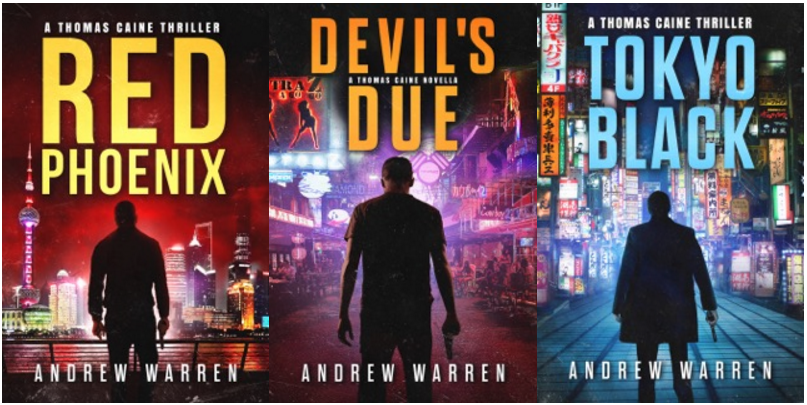
Red
Phoenix launches on Amazon Feb 7th. You can also check out Devil’s
Due, and Tokyo
Black, out now! If you want to know more about my books and
what I’m working on, you can visit my website at www.andrewwarrenbooks.com. You can also drop me a line on Facebook:
@andrewarrenbooks, or Twitter: @aawarren71.
And if anyone has any questions about
Thomas Caine, self-publishing, or writing in general, please don’t hesitate to
contact me… I’ll do my best to answer!
Monday, February 6, 2017
Free Scott Stiletto Preview
We're about a month away from the official launch of my new Stiletto series and I wanted to give you a sneak-peak.
Basically what I'd like to do is build a "street team" of readers who can leave some Amazon reviews on launch day or a few days after, or, worse case, tell this emperor that he has no clothes before he makes a fool of himself. I'm thinking the second week of March would be a good time to release the book unless you tell me it would be better to delete the damn thing.
I've set up a download page at Book Funnel for free downloads of Stiletto #1: The Termination Protocol. If you'd like to read it, please email me at briandrake88 at yahoo dot com and I'll provide you with a link.
Those of you who read an earlier version of this book in 2014 will for sure want the free download because I don't want you to buy it twice. There have been extensive revisions to make this the start of a series, so it's not entirely the same book.
Here's the description:
Basically what I'd like to do is build a "street team" of readers who can leave some Amazon reviews on launch day or a few days after, or, worse case, tell this emperor that he has no clothes before he makes a fool of himself. I'm thinking the second week of March would be a good time to release the book unless you tell me it would be better to delete the damn thing.
I've set up a download page at Book Funnel for free downloads of Stiletto #1: The Termination Protocol. If you'd like to read it, please email me at briandrake88 at yahoo dot com and I'll provide you with a link.
Those of you who read an earlier version of this book in 2014 will for sure want the free download because I don't want you to buy it twice. There have been extensive revisions to make this the start of a series, so it's not entirely the same book.
Here's the description:
The Termination Protocol

Thursday, December 29, 2016
There's Something About de Villiers ... Or, I Really Need to Learn French
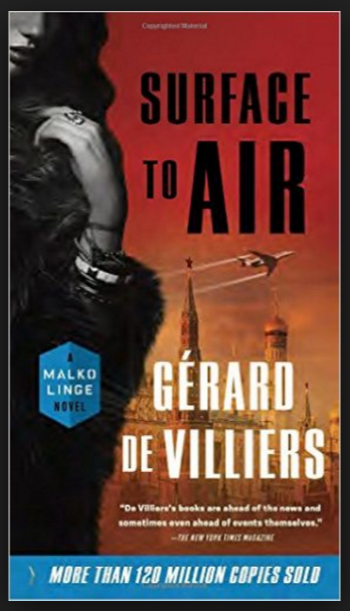 Black Lizard is out with its latest Gerard de Villiers Malko novel, Surface to Air, and as always it's a grabber from page one. I suppose, however, that the chosen format for this edition hints that it is the last of the U.S. translations, because instead of a glossy trade paperback, we get a traditional mass market printing, which means my set won't match. Dammit, Black Lizard!
It also means I have to learn French if I want to read the rest of the de Villiers canon.
When you read the back cover about a terrorist plan to shoot down Air Force One, you might think, meh; when the opening chapters are of said terrorists repeating durka durka jihad over and over, you might also think, meh; but when you get into the guts of the story, de Villiers has a way of making this tired terrorist-of-the-week plot seem fresh. If I can figure out how, I'll make a million bucks on my own terrorist-of-the-week books.
Anyway it's sad to see what looks like the last of the U.S. editions, unless I want to pay an arm and a leg for the '70s Pinnacle paperbacks, and I might just do that. As flawed as he can be, de Villiers knows how to tell a story, and that's always a good thing.
Sunday, October 16, 2016
Ed Gorman--A Few Thoughts
My thoughts and prayers are with the family and friends of Ed Gorman tonight. I returned from the memorial service of my girlfriend's grandfather today to learn of Mr. Gorman's passing, so it's been a long day.
I only knew Mr. Gorman through his writing, and while he didn't necessarily help shape my voice, he contributed to the development of it, and exposed me to other writers whom I may not have discovered myself.
My initial exposure to Mr. Gorman's work came through the first Black Lizard short story anthology, which had been a Christmas gift one year. I must have read his introduction a thousand times, because he talked about the pulp writers of yesteryear with such enthusiasm and awe that it was contagious. I went hunting for every author he named--Vin Packer. Peter Rabe. Lionel White. Many others. If I found a Gold Medal book in a used bookshop, I grabbed it, because he spoke of Gold Medal as if it were the Bible, and everything within was sacred writing.
He was right, most of the time. He said those authors wrote more about life than plot, and those authors showed me there was a lot more one could put into a story than blondes, bombs, and quasi-Bonds. Black hats weren't necessarily bad, and the white hats weren't always good; the gray hats were the ones you could trust.
He wrote so lovingly of John D. McDonald that I built a small collection of John D.'s work, and when Mr. Gorman said that writers should memorize Dead Low Tied, I went out and bought it. I read that book cover-to-cover on a flight to Montana once. He was right again. Wonderful book.
Mr. Gorman wrote of the pulps with such affection and you could tell he wanted to show us the best of the best, and any anthology that had his name on it, I grabbed. I'm sure I'm missing a few, and it might be nice to find a complete bibliography (I'm sure one exists) for the books I'm missing. His introductions to each story were also well thought out and gave you an insight into the author presented, and I may not have liked every story, but I read every word just to see if he was right.
And then there was his own work. I didn't read all of his books, but I read enough of them. He showed me a western could be as modern as anything Hammett or Parker put down, and made me want to write one someday (which I have, for the Blaze! series; more to come on that in the future).
Mr. Gorman is responsible for one of the most moving, chilling, and, I think, best short stories ever written with "The Long Silence After". I dare anybody to read that and not still be thinking about it ten years later, and after only one read too. That story sits with Block's Eight Million Ways to Die and Goodis' "Black Pudding" and Reasoner's "Graveyard Shift" as stories you can never forget even if you try, and why would you want to? Mr. Gorman's stories had heart. They were real. He believed what he was writing and it showed. No shortcuts or gimmicks.
I owe Mr. Gorman a lot for exposing me to the kind of power storytelling can have, and inspiring me to want to create that kind of power myself.
His path to publication was also inspiring. When, as a 20-something, I read that he hadn't published until he was in his 40s, I decided that I could take my time and not feel the need to rush. Oddly, I'm now in my 40s, and there is so much to talk about outside my independent publishing efforts that I don't know where to start. More to come as deals develop. Ludlum and Fleming didn't publish until their 40s as well. Maybe there's something about one's life experience that makes that age the combustion point for a writing career. We'll see.
Ed Gorman is gone but his legacy remains; he touched a lot of lives, and probably never knew just how many. But we are out there, and we will carry on writing about this crazy mixed up world so future generations can, maybe, make sense of it.
I only knew Mr. Gorman through his writing, and while he didn't necessarily help shape my voice, he contributed to the development of it, and exposed me to other writers whom I may not have discovered myself.
My initial exposure to Mr. Gorman's work came through the first Black Lizard short story anthology, which had been a Christmas gift one year. I must have read his introduction a thousand times, because he talked about the pulp writers of yesteryear with such enthusiasm and awe that it was contagious. I went hunting for every author he named--Vin Packer. Peter Rabe. Lionel White. Many others. If I found a Gold Medal book in a used bookshop, I grabbed it, because he spoke of Gold Medal as if it were the Bible, and everything within was sacred writing.
He was right, most of the time. He said those authors wrote more about life than plot, and those authors showed me there was a lot more one could put into a story than blondes, bombs, and quasi-Bonds. Black hats weren't necessarily bad, and the white hats weren't always good; the gray hats were the ones you could trust.
He wrote so lovingly of John D. McDonald that I built a small collection of John D.'s work, and when Mr. Gorman said that writers should memorize Dead Low Tied, I went out and bought it. I read that book cover-to-cover on a flight to Montana once. He was right again. Wonderful book.
Mr. Gorman wrote of the pulps with such affection and you could tell he wanted to show us the best of the best, and any anthology that had his name on it, I grabbed. I'm sure I'm missing a few, and it might be nice to find a complete bibliography (I'm sure one exists) for the books I'm missing. His introductions to each story were also well thought out and gave you an insight into the author presented, and I may not have liked every story, but I read every word just to see if he was right.
And then there was his own work. I didn't read all of his books, but I read enough of them. He showed me a western could be as modern as anything Hammett or Parker put down, and made me want to write one someday (which I have, for the Blaze! series; more to come on that in the future).
Mr. Gorman is responsible for one of the most moving, chilling, and, I think, best short stories ever written with "The Long Silence After". I dare anybody to read that and not still be thinking about it ten years later, and after only one read too. That story sits with Block's Eight Million Ways to Die and Goodis' "Black Pudding" and Reasoner's "Graveyard Shift" as stories you can never forget even if you try, and why would you want to? Mr. Gorman's stories had heart. They were real. He believed what he was writing and it showed. No shortcuts or gimmicks.
I owe Mr. Gorman a lot for exposing me to the kind of power storytelling can have, and inspiring me to want to create that kind of power myself.
His path to publication was also inspiring. When, as a 20-something, I read that he hadn't published until he was in his 40s, I decided that I could take my time and not feel the need to rush. Oddly, I'm now in my 40s, and there is so much to talk about outside my independent publishing efforts that I don't know where to start. More to come as deals develop. Ludlum and Fleming didn't publish until their 40s as well. Maybe there's something about one's life experience that makes that age the combustion point for a writing career. We'll see.
Ed Gorman is gone but his legacy remains; he touched a lot of lives, and probably never knew just how many. But we are out there, and we will carry on writing about this crazy mixed up world so future generations can, maybe, make sense of it.
Subscribe to:
Posts (Atom)